Brisbane CCTV ExpertsSecurity, antenna, TV + data

Placement guide

Where Should CCTV Cameras Be Installed?

Good placement is what turns CCTV from a decoration into useful evidence.

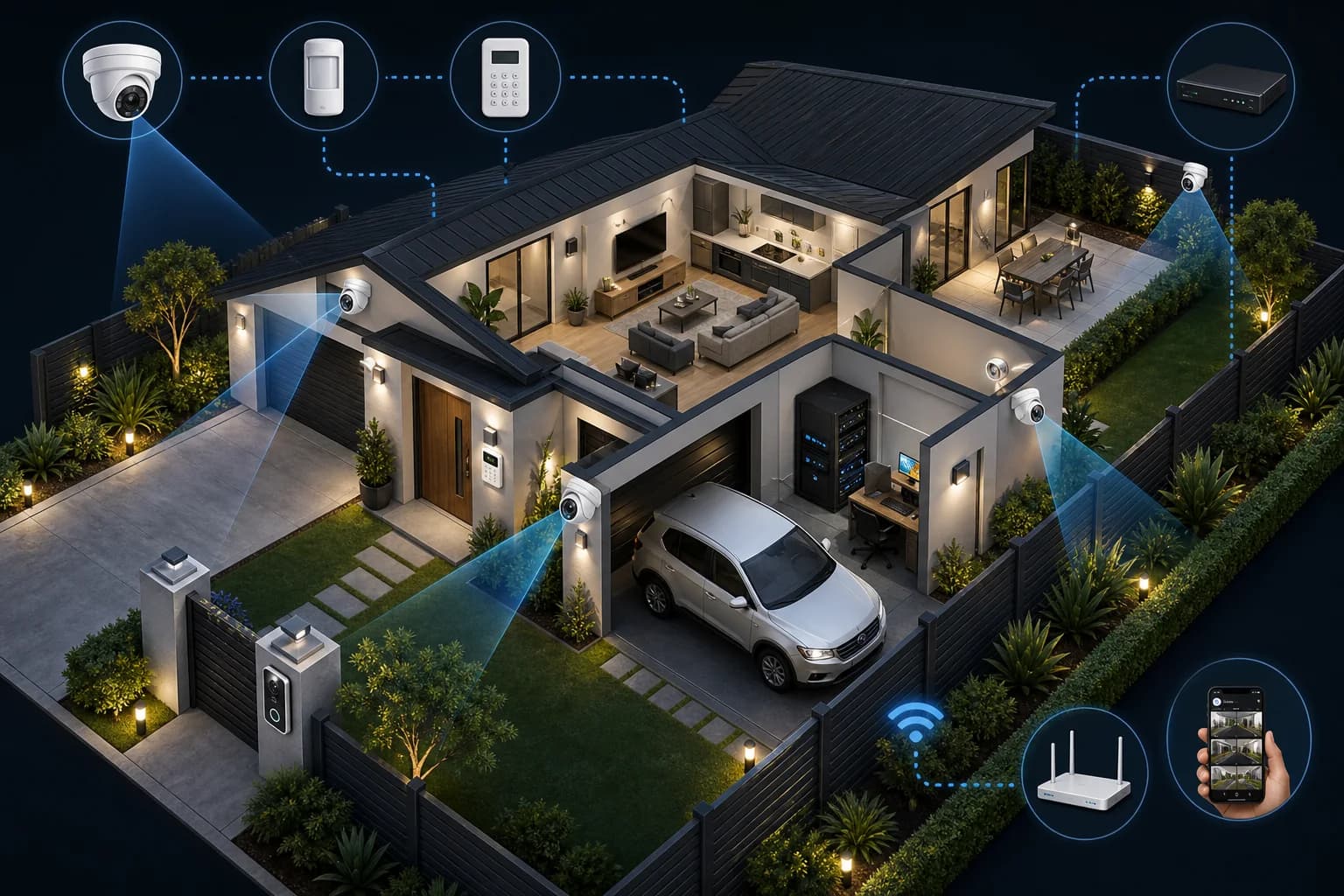
Isometric infographic of a secured home with CCTV cameras, intercom, alarm, recorder, network equipment, and phone viewing

Protect what matters

Clean install path

Phone access and playback tested

What this helps you solve

Clear answer before you enquire.

The best CCTV camera positions usually cover entry points, driveways, side paths, rear access, business counters, storage areas, and high-risk blind spots without creating privacy problems.

Decide

Use this to narrow the choice before guessing equipment.

Send

Suburb, property type, what you want protected, fixed or connected, and any existing issue.

Next

Get a quote when the layout or fault is clear enough to discuss.

Who this helps

A quick decision guide before you request a quote.

These guides answer the questions people usually ask before choosing cameras: cost, placement, wired versus wireless, phone viewing, brands, and troubleshooting.

Homes
Businesses
Driveways
Side access
Rear entries
Old systems

What we check

  • Camera count
  • Cabling
  • Recorder
  • App access
  • Night vision
  • Property layout

Before you request a quote

Use this to get a better CCTV recommendation.

The strongest quote requests are specific. Use the guide, then send the suburb, property type, camera zones, and any old-system issues.

Property type

Tell us whether it is a home, shop, office, warehouse, townhouse, rental, or mixed-use site.

Areas to cover

List the entry points, driveway, side access, counters, storage areas, or old-system problems that matter.

System preferences

Mention wired, wireless, phone viewing, night vision, brand preference, or recorder needs if you already know them.

Decision point

If you are unsure, send what you know. We can work from the property details before recommending a package.

Planning detail

Use the answer to make a better CCTV decision.

Use this section to turn the guide into a better quote request, cleaner decision, or sharper troubleshooting path.

When people usually need this

You want to understand the decision before asking for a quote.
You are comparing options and need a practical way to narrow the next step.
You have a fault, concern, or planning question that affects camera count, placement, recorder, app access, or privacy.
You want to send better details so the recommendation is based on the property, not guesswork.

What we handle

Plain-English answer

The guide should make one CCTV decision easier without hiding the important caveats.

Quote relevance

Each guide points back to the service page it supports.

Decision factors

The page highlights the variables that change the answer: layout, cabling, lighting, recorder, network, storage, or legal caution.

Next step

When the guide reaches its limit, the customer should know what to send for a sharper quote.

Decision path

Choose the path that matches the job.

Use the guide only

Best for: Early research and simple understanding.

Watch: The property may still change the recommendation.

Get a Quote

Best for: When camera count, layout, or install path needs a real answer.

Watch: Send details instead of guessing.

Book repair/help

Best for: App offline, no recording, blurry footage, or poor night vision.

Watch: Changing settings blindly can make diagnosis harder.

Property types we plan for

Homes

Entry, driveway, side access, remote viewing, legal/privacy basics, and package decisions.

Businesses

Counter, stock, staff/customer areas, recorder storage, and manager access.

Commercial sites

Custom layout, storage, cabling, access control, and multi-user review needs.

Existing systems

Troubleshooting, repair, recorder, app, and upgrade decisions.

Common mistakes

  • Using guide content as a substitute for property-specific planning.
  • Choosing camera count before listing the areas to cover.
  • Ignoring recorder, storage, and app handover.
  • Treating legal/privacy basics as legal advice.

Send this for a sharper quote

  • Suburb and property type.
  • The decision or issue you are trying to solve.
  • Areas to cover, photos, existing equipment, or app screenshots where relevant.
  • Whether you want install, repair, upgrade, app setup, or planning help.

How to use this guide

Turn the answer into a better CCTV decision.

Use the guide to narrow the decision, then send the property details that change the actual recommendation.

What this helps decide

Use this page to narrow one decision: camera count, placement, wiring, recorder choice, brand fit, privacy, app access, or troubleshooting direction.

What still depends on the property

The final recommendation still depends on suburb, building type, cable access, lighting, internet, existing equipment, and the areas that need useful footage.

What to send next

Send what you need protected, property type, whether it is a new install or existing system, and any photos of entries, driveway, recorder, antenna, TV point, or problem equipment.

What not to guess

Do not guess camera count, recorder size, or brand before the layout is clear. A clean quote starts with the job conditions.

Home placement

Front entry, driveway, garage, side gate, back door, and yard are the usual starting points.

Business placement

Entrances, POS, reception, storage, loading, staff-only areas, and perimeter access usually matter most.

Coverage planning

Home coverage plan

A home CCTV layout should be based on the views that actually matter: entries, driveway, side access, rear doors, and low-light approach points.

Zone 01

Front entry

Visitors, deliveries, faces, and the main approach.

Zone 02

Driveway

Vehicles, garage access, and movement near the street.

Zone 03

Side access

Narrow paths, gates, bins, and blind spots.

Zone 04

Rear entry

Back door, patio, yard, and low-light approach points.

Camera angle
Cable path
Recorder/app handover

Quick answers

Questions before you choose

What is the biggest placement mistake?

Mounting cameras where they see movement but not useful identifying detail.

What should I do after reading this guide?

Send the suburb, property type, areas to cover, and the decision or fault you are trying to solve. That gives us a better starting point than guessing camera count.

Does this guide replace a property-specific quote?

No. It explains the decision, but the final recommendation still depends on the property layout, cabling, lighting, recorder, network, and use case.

Can this guide help with both homes and businesses?

Yes, but the answer should be adapted to the property type. Homes, shops, offices, warehouses, and commercial sites have different coverage needs.

After you enquire

What happens next.

We use the job details to work out the most useful next step before anyone guesses at camera count or equipment.

01

Send the property details

Use the guide to send suburb, property type, what you need protected, and any brand, wiring, signal, screen, or app questions you already have.

02

We turn it into the next step

The guide topic is the starting point. The property details decide whether you need a package, repair, upgrade or layout check.

03

You get a clearer recommendation

We respond around the real job instead of giving a generic answer that ignores cabling, recording, and handover.

Get a quote

Tell us what you need installed or fixed

You do not need to know the camera count, cable path, antenna fault, or exact part name. Send the suburb, property type, and what you want done: CCTV, security cameras, antenna, TV point, wall mounting, Starlink, data, app setup, repair or upgrade.

Specialist, not handyman CCTV

  • Property type, suburb, and what you need protected, fixed, connected, or set up.
  • Whether the job needs a new install, repair, upgrade, or app setup.
  • Recorder, storage, phone app, and handover needs.
  • Cheap, DIY, and rushed camera setups are not the benchmark.
Get a Quote
CallGet a Quote